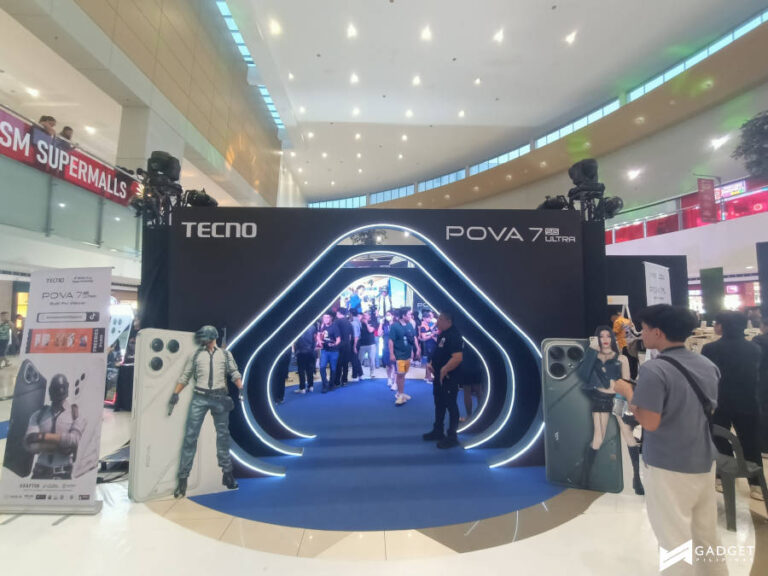
TECNO POVA 7 Ultra 5G
Gamers want strong performance, bold looks, and modern extras like wireless charging in a gaming smartphone—and the TECNO POVA 7 Ultra 5G delivers all of that at a price that undercuts many rivals. It offers a 144Hz AMOLED, a large battery, MediaTek’s Dimensity 8350 Ultimate, and a 108MP main camera, plus gaming-tuned software and useful AI features. While it won’t replace premium gaming flagships, it comes surprisingly close for a midranger.
Build and Design
The POVA 7 Ultra 5G has a loud, gamer-forward aesthetic with geometric lines, a chunky camera island, and a status LED ring around the camera that adds flair without going overboard. It’s IP64-rated for dust and splash resistance and comes in Geek Black or Geek White. The phone uses a glass front and a plastic back to keep weight down and help thermals under load; our review unit was Geek Black.
The rear LED ring is both functional and decorative, useful for notifications and game-status cues. However, the LED color isn’t customizable—a missed opportunity for personalization in a gaming phone. A full-cover case tones down the look, though it hides the styling that makes the phone stand out. TECNO’s magnetic-friendly case means many MagSafe-style wireless chargers and accessories attach securely, even if some third-party chargers look a bit oversized when used with the phone.
Display
The 6.67-inch, 1.5K AMOLED panel is built for speed and clarity, supporting up to 144Hz for smooth scrolling and gaming visuals. Peak brightness of up to 4,500 nits improves sunlight visibility for maps and outdoor use, and the panel is protected by Gorilla Glass 7i. The combination of resolution, high refresh rate, and peak brightness makes it one of the best displays in its price class—especially for competitive gaming where frame clarity matters.
Color tuning is punchy out of the box, and the 144Hz mode keeps animations and UI transitions smooth across the system and supported games. Not every title will run at 144 FPS, but the screen’s high ceiling pairs well with the chipset’s headroom to push 90–120 FPS in supported titles depending on developer caps and settings.
Hardware
At the core is the MediaTek Dimensity 8350 Ultimate, a customized upper-midrange SoC paired with Mali-G615 MC6 graphics and up to 12GB of RAM and 256GB of storage. TECNO advertises a 12-layer cooling solution to keep clocks stable during long sessions. The phone supports 5G, NFC, Wi‑Fi, Bluetooth 5.4, and an under-display fingerprint sensor. It also supports TECNO’s FreeLink, a peer-to-peer feature that enables calls and texts between compatible phones up to 1 km away in low-signal scenarios—niche but novel.
In daily use the chipset handles multitasking and heavy games at high frame rates, especially when paired with POVA’s gaming software suite for per-title tuning. Compared with the Infinix GT 30 Pro (which uses the same CPU/GPU combo), TECNO’s advantage is a larger battery and faster wired charging; Infinix counters with shoulder triggers and, on some variants, JBL-tuned speakers.
Benchmark
Measured scores for our unit compared to other midrange devices we reviewed:
– AnTuTu: 1,421,580
– Geekbench Single Core: 1,212
– Geekbench Multi Core: 4,093
– 3DMark Wild Life Extreme: 2,939
– PCMark 3.0: 16,504
These numbers are consistent with other Dimensity 8350 Ultimate devices and support the phone’s ability to handle competitive play and heavy workloads. TECNO sometimes cites >1.53M on AnTuTu under ideal conditions; real-world results vary with thermals, storage usage, and background processes. What matters more is consistency, and with its cooling stack and Bypass Charging support, the POVA 7 Ultra 5G stays steady under pressure.
Software and AI Features
The phone runs Android 15 with HiOS 15 and includes practical tweaks for gamers and strong AI integrations. Ella returns as TECNO’s assistant and links users to DeepSeek R1-powered features—translation, writing aids, and smarter on-device tools—similar to features on recent TECNO Camon models. Google’s Circle to Search is included, and TECNO’s AI Studio offers creative photo tools like AI Eraser and portrait enhancements.
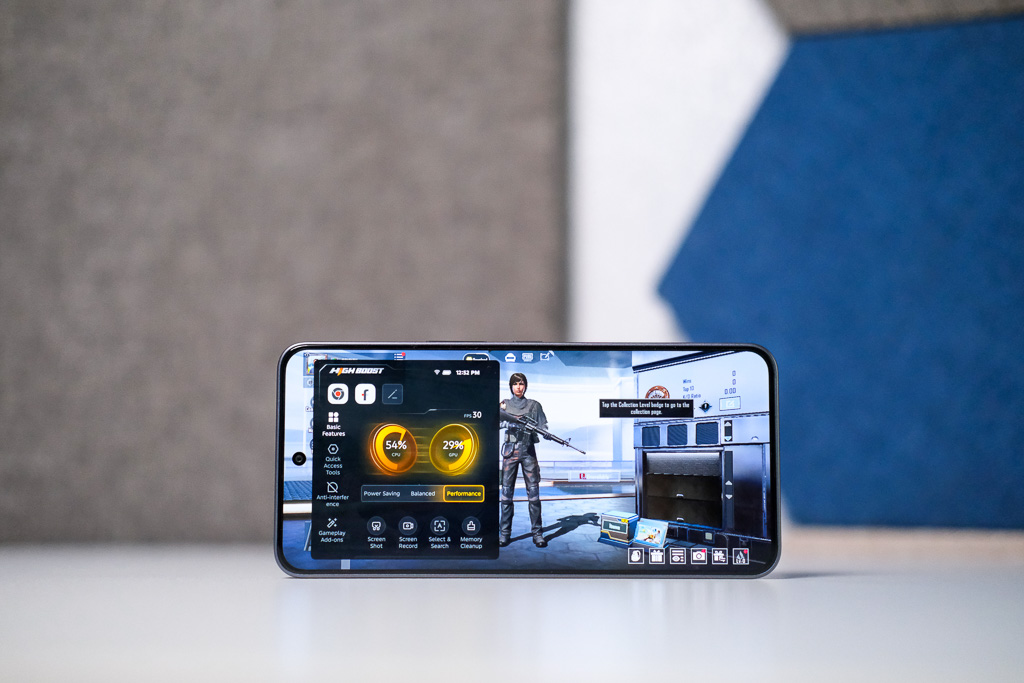
Gamespace is the primary gaming hub: it offers performance tuning per game, eye-care toggles, Esports Mode, Off-Screen gaming, and Bypass Charging to power the phone directly from the charger (reducing battery heat and wear during long sessions). There’s also an AI Magic Box overlay for contextual tips in supported games and Game Filters to adjust visuals if a title’s default style isn’t to your taste. The suite feels gamer-first without being overly bloated.
Camera
The main camera is a 108MP sensor, paired with an 8MP ultrawide and a 13MP front-facing camera. Daytime photos are sharp, with good detail and punchy colors, although the default AI Cam contrast can be a bit aggressive—dialing that back yields more natural results. The ultrawide delivers acceptable results for its class and is useful for travel scenes and group shots. The selfie camera is solid for social posts and video calls.
Video capture supports up to 4K60 on the rear and 4K on the front—a standout capability at this price. There is a noticeable preview delay on the display when shooting 4K60, which can be distracting when framing fast-moving subjects; it doesn’t ruin the final footage but is worth noting. HDR video is limited to 1080p30, a clear trade-off, but overall video is serviceable for social media and everyday clips.
Audio
This is the phone’s most consistent sore spot: volume. The dual speakers with Dolby Atmos are clear but not as loud as expected for a gaming phone—especially in noisy environments or when a hand muffles one grille in landscape. Competing devices like the Infinix GT 30 Pro can deliver louder output and, on some variants, specialty tuning that gives them fuller sound. Headphones or a gaming headset solve the issue, but those who rely on speakers should expect to raise volume near maximum often.
Battery
Battery life is a strong suit thanks to a 6,000mAh cell and 70W wired charging plus 30W wireless charging support—rare in this segment. Wired top-ups are quick, and wireless charging adds convenience at home or at a desk, especially with magnetic cases that snap to chargers reliably. The phone also supports reverse wired charging (10W to Transsion products, 5W to other compatible smartphones), useful for juicing accessories in a pinch.
Bypass Charging is the standout feature for gamers: it lets power flow directly from the charger to the system while bypassing the battery during long sessions, reducing heat buildup and preserving battery health. This feature, more common in pricier gaming phones, makes a real difference during marathon sessions of games like Genshin Impact or PUBG.
Gaming Experience
In real-world play the POVA 7 Ultra 5G shines for its price. With the Dimensity 8350 Ultimate and the 144Hz AMOLED, it handles popular titles such as Genshin Impact, Diablo Immortal, and PUBG at high frame rates with smart tuning through Gamespace. Performance Modes allow balancing battery life and thermals against raw speed, while Esports Mode minimizes distractions and optimizes resources per title.
Eye Care mode reduces strain during long sessions, Off-Screen mode keeps certain tasks active, and Bypass Charging helps control temperatures and battery cycles during extended play. The AI Magic Box overlay provides useful contextual tips in supported games, and Game Filters let players personalize visuals if a game’s color palette or contrast doesn’t suit them. Overall, the user experience shows TECNO understands what gamers expect in daily use.
Price and Positioning
This is one of the best-priced gaming smartphones in the market relative to performance and design. It won’t out-style devices like the ROG or RedMagic, but it’s a strong midrange contender that competes with those brands’ appeal—without the ultra-premium internals. The closest rival is the Infinix GT 30 Pro, which offers similar performance with the same chipset but a slightly smaller battery, slower wired charging, and comparable wireless charging. Transsion (parent company of TECNO and Infinix) is clearly using aggressive pricing that pressures other brands like Xiaomi and OPPO in this tier—buyers win if margins are tight.
Local pricing in the Philippines is aggressive, with official tags and frequent promotional dips around launch windows. Bundles—such as a magnetic wireless power bank and themed case—reinforce the gamer pitch and strengthen the value case.
Verdict
The TECNO POVA 7 Ultra 5G nails the fundamentals for a gaming-focused midrange phone: a fast 144Hz AMOLED, strong sustained performance, useful gaming software, modern AI features, and a large battery with both 70W wired and 30W wireless charging. The design has personality without being overbearing, and the 108MP main camera delivers sharp daytime shots, though AI contrast could be tempered and HDR video is limited to 1080p30.
The biggest complaints are speaker loudness—it isn’t as loud as it should be for a gaming phone—and the rear status LED color isn’t customizable, which feels like a missed opportunity for personalization. These are manageable trade-offs given the price.
TECNO’s offer sets a high bar for value in 2025 midrange gaming phones and sends a clear message to the rest of the field to keep up. (TECNO’s offer: https://bit.ly/POVA7UNTRA5G)
Expert Score: 8.6
Category scores:
– Design: 9
– Hardware: 8.5
– Performance: 9
– Software: 8
– Camera (Stills): 8
– Camera (Video): 8
– Sound: 7
– Battery: 10
– Value: 10
Pros
– Excellent price-to-performance with the Dimensity 8350 Ultimate and 144Hz AMOLED
– Large 6,000mAh battery with 70W wired and 30W wireless charging in this class
– Gamer-focused software: Gamespace tuning, Bypass Charging, Esports Mode, AI Magic Box, and filters
– 108MP main camera performs well for the segment
– 4K60 capture on the rear and 4K on the selfie cam
– Magnetic-friendly case and wireless charging work well with many accessories
Cons
– Speaker volume is underwhelming for a gaming-focused phone
– Rear LED color is not customizable
– A step behind trendsetters like Nothing’s light system in terms of flashy customization
– HDR video limited to 1080p30
– Slight live-view delay when recording at 4K60
About the Author